How Minecraft World Generation Works: Biomes, Caves, Structures & More
Every Minecraft world looks different, but the terrain you see when you create a new world is not completely random. Minecraft uses a complex world-generation system to decide where mountains, oceans, forests, caves, villages, structures and other features appear.
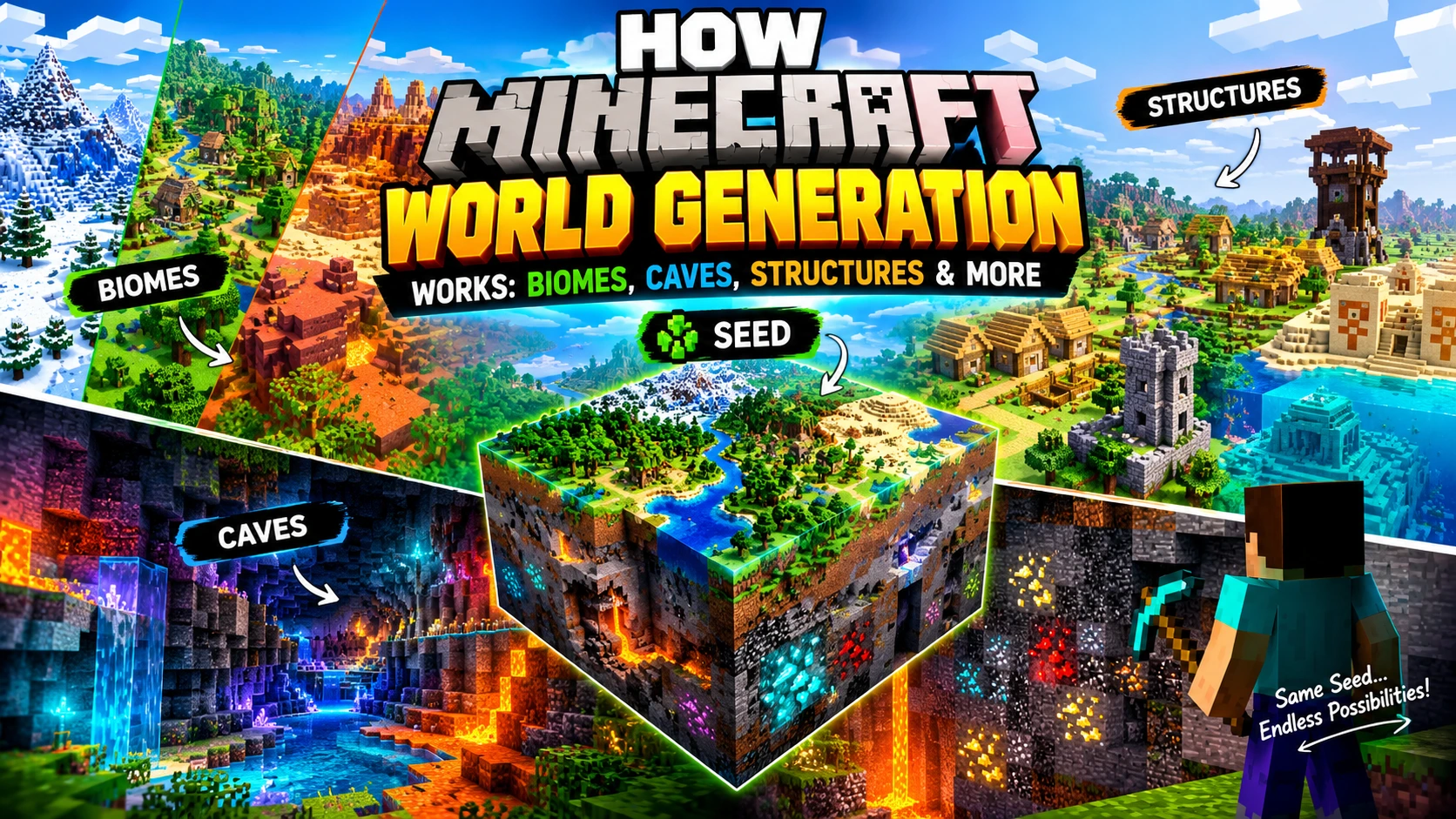
This system is one of the most important parts of Minecraft because it determines what your world looks like before you even place your first block.
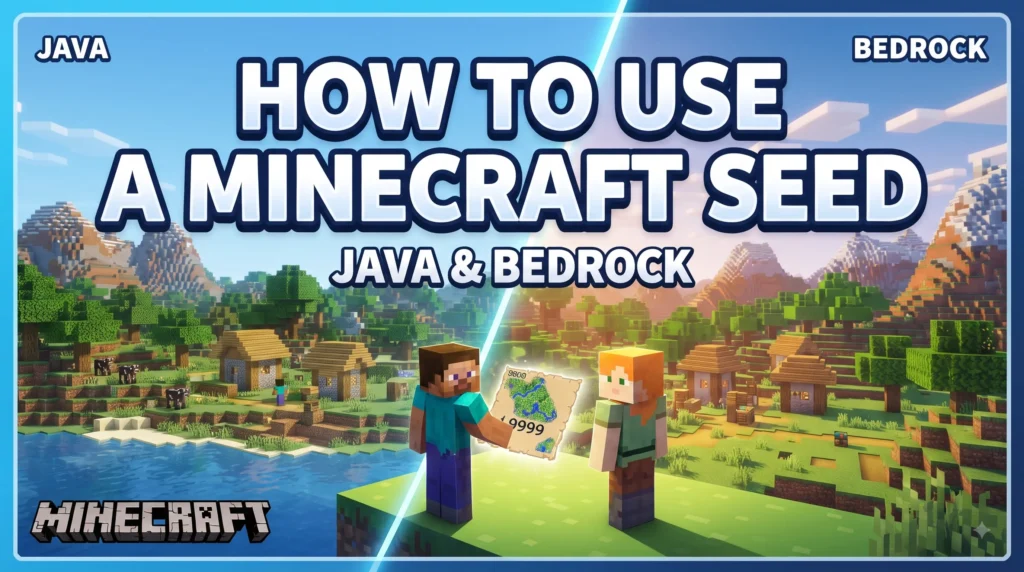
A Minecraft seed acts as the starting input for world generation. The game uses that seed together with its world-generation rules to create terrain and features across the world. This is why entering the same seed can produce a recognizable world layout when the same Minecraft version and edition are used.
In this guide, we will explain how Minecraft world generation works, including biomes, terrain, caves, ores, structures, chunks, seeds and why worlds can change between Minecraft versions.
What Is Minecraft World Generation?
Minecraft world generation is the process the game uses to create a world from scratch.
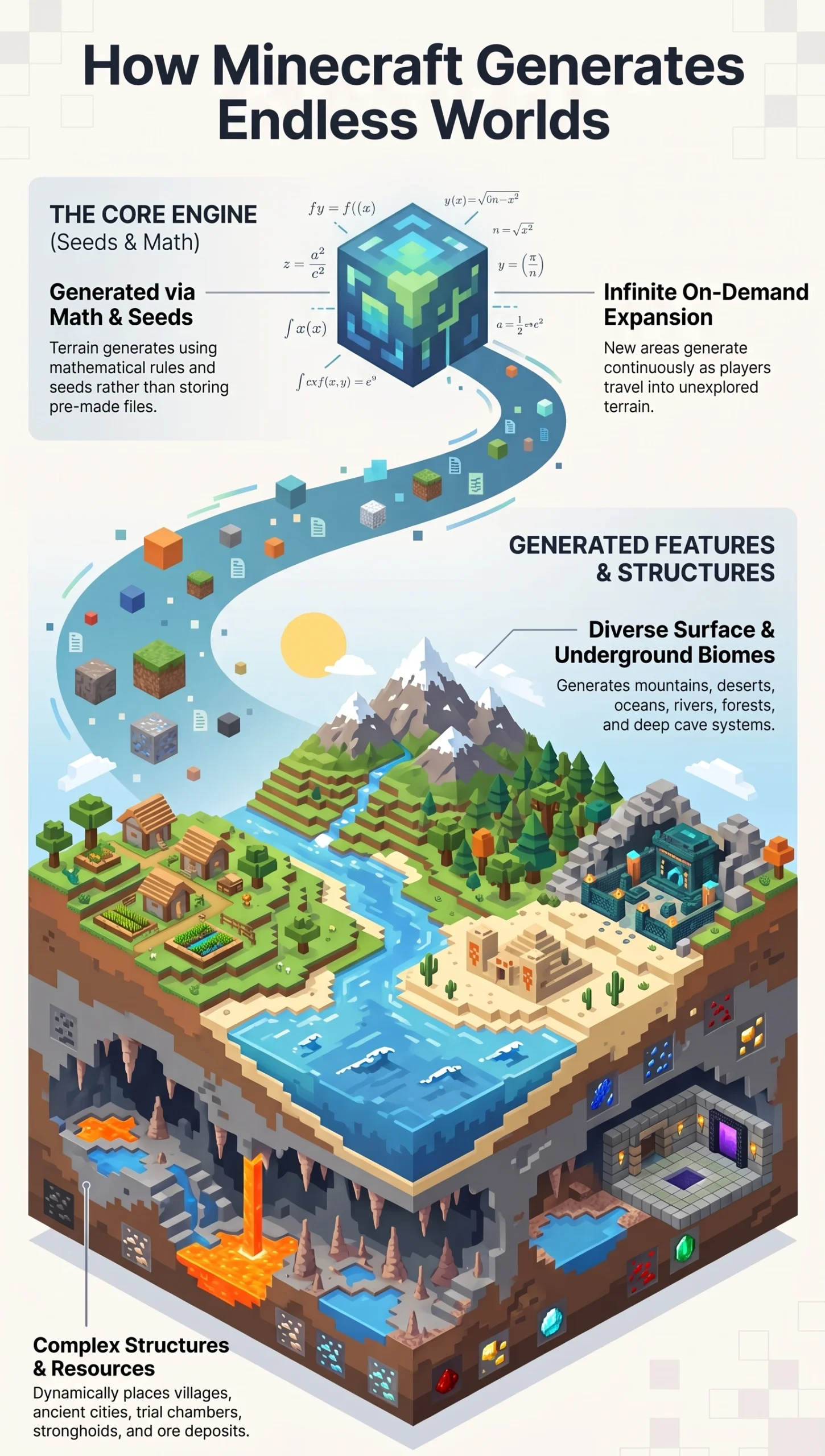
When you create a new world, Minecraft needs to decide where thousands of different elements should exist. These include:
- Mountains
- Plains
- Deserts
- Oceans
- Rivers
- Forests
- Caves
- Underground structures
- Villages
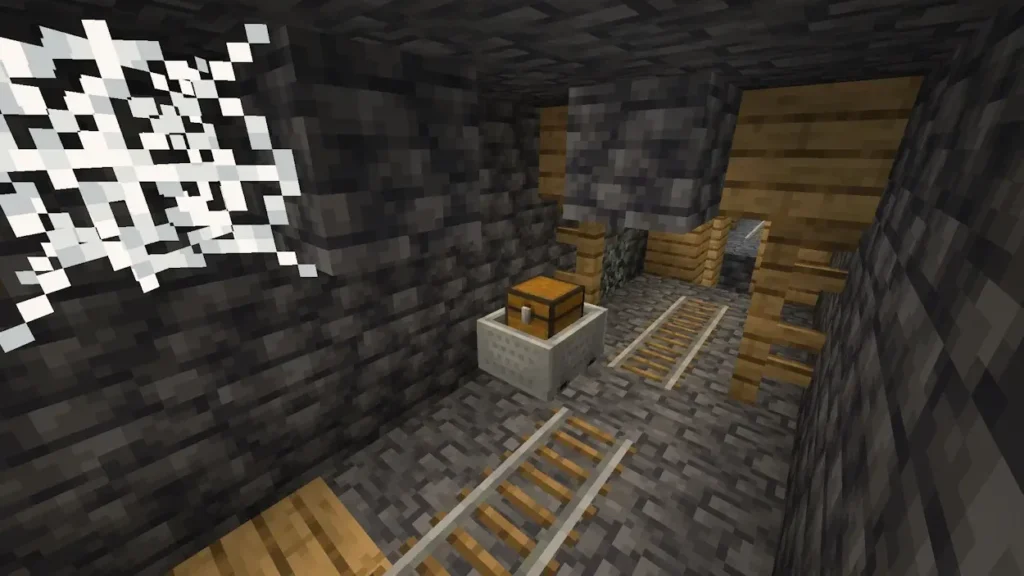
- Mineshafts
- Strongholds
- Ancient Cities
- Trial Chambers
- Ruined Portals
- Ores
- Trees and vegetation
- Lakes and other terrain features
Instead of manually storing an entire world, Minecraft generates terrain according to mathematical rules and the world’s seed.
This allows Minecraft worlds to become extremely large while still being generated as players explore new areas.
How Minecraft Seeds Affect World Generation
A Minecraft seed is a number or value used as an input for world generation.
When you create a world with a specific seed, Minecraft uses that seed to determine many aspects of the generated world.
For example, a seed can influence the locations and shapes of:
- Biomes
- Mountains
- Oceans
- Rivers
- Caves
- Villages
- Structures
- Resource distribution
- Other terrain features
This is why Minecraft seed websites can provide seeds designed around specific locations, such as villages near spawn, large caves or unusual terrain.
However, a seed does not work completely independently. The Minecraft edition and version also matter.
A seed generated in one version may not produce exactly the same terrain or structures in another version because world-generation rules can change.
Why Minecraft Versions Matter
Minecraft world generation has changed significantly over the years.
When Mojang introduces new biomes, cave systems, structures or terrain-generation changes, the rules used to create new chunks can also change.
This means that the same seed may produce different results between different Minecraft versions.
For example, a seed created for an older generation system may have different:
- Cave layouts
- Terrain heights
- Biome locations
- Structure positions
- Ore distribution
- Underground generation
This is particularly important when using Minecraft seed guides.
If a seed article says that a village or structure exists at a specific coordinate, you should use the Minecraft version and edition mentioned by the seed creator.
How Biomes Are Generated
Biomes determine the environmental identity of different parts of a Minecraft world.
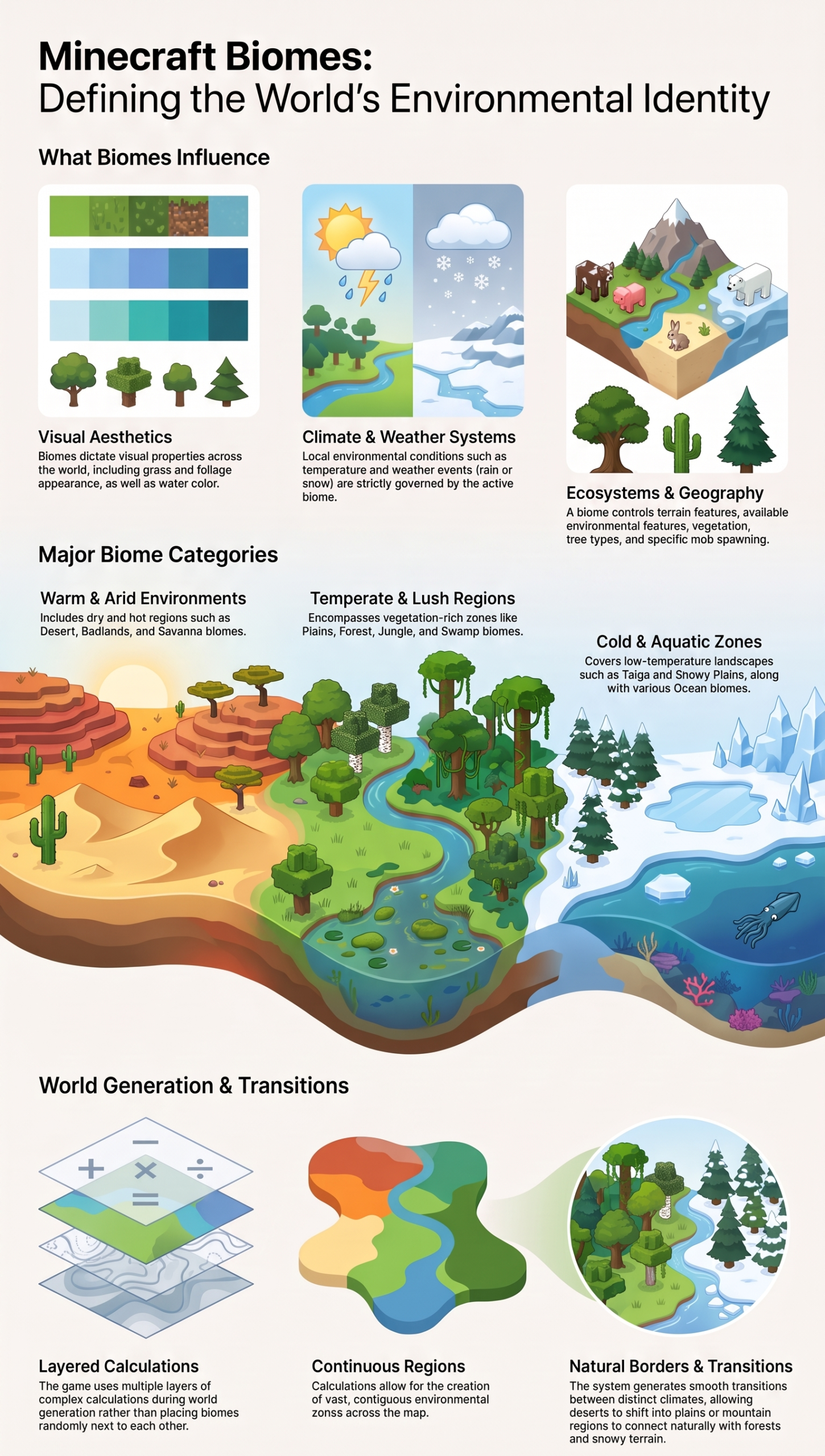
A biome can influence things such as:
- Grass and foliage appearance
- Temperature
- Rain or snow
- Trees
- Vegetation
- Mob spawning
- Terrain features
- Water color
- Available environmental features
Minecraft has many different biomes, including Plains, Forest, Desert, Jungle, Taiga, Badlands, Savanna, Swamp, Snowy Plains and various ocean biomes.
The game does not simply place biomes randomly next to one another.
World generation uses several layers of calculations to create transitions between different environments. This helps produce large continuous regions while also creating interesting borders between biomes.
A desert can eventually transition into plains, while a mountain region can connect to forests or snowy terrain.
Terrain Generation
Biomes are only part of the world-generation process.
Minecraft also needs to decide the shape and height of the land itself.
This creates:
- Mountains
- Hills
- Valleys
- Plains
- Cliffs
- Coastlines
- Ocean floors
- River valleys
Modern Minecraft terrain generation uses multiple layers of mathematical noise and rules to create natural-looking variation.
You can think of this as a system that decides how high or low different parts of the world should be.
One area might become relatively flat because the terrain values are low and stable. Another area may rise dramatically because the generation system produces higher terrain values.
The result is a world that does not look like a simple grid of randomly placed blocks.
How Minecraft Caves Are Generated
Caves are another major part of world generation.
Modern Minecraft underground generation can create enormous cave systems with different shapes and sizes.
You may encounter:
- Normal caves
- Large caverns
- Deep underground chambers
- Water-filled caves
- Lava areas
- Dripstone caves
- Lush caves
- Deep Dark areas
Cave generation is separate from simply digging random holes into terrain.
The game uses generation rules to create connected underground spaces, tunnels and larger chambers.
This is why some seeds can contain extremely large cave systems while others produce much smaller underground areas.
Lush Caves and Other Cave Biomes
Some underground areas are associated with specific cave biomes.
The Lush Caves biome can generate underground with features such as glow berries, moss and other vegetation.
Dripstone Caves use different underground features, while the Deep Dark is associated with Ancient Cities and sculk-related generation.
These cave biomes demonstrate that Minecraft world generation is not limited to the surface.
The game generates environmental rules underground as well as above ground.
How Ores Are Generated
Minecraft also needs to decide where underground resources appear.
Different ores have different generation rules.
These rules can depend on factors such as:
- Height
- Depth
- Biome
- Underground location
- Generation version
- Ore type
For example, Diamond is strongly associated with deeper underground areas, while other ores have their own preferred generation ranges.
Ore generation also creates clusters and veins rather than placing every ore block completely independently.
This is why mining in Minecraft can sometimes reveal several connected blocks of the same resource.
How Structures Are Generated
Minecraft structures are another important part of world generation.
Structures include locations such as:
- Villages
- Desert Temples
- Jungle Temples
- Woodland Mansions
- Pillager Outposts
- Ocean Monuments
- Strongholds
- Mineshafts
- Ancient Cities
- Trial Chambers
- Ruined Portals
- Shipwrecks
Structures have their own generation rules.
The game first determines whether a structure can generate in a particular area. It then checks additional conditions such as biome, spacing and other generation rules before placing it.
This is why you cannot simply find every structure anywhere in the world.
A village, for example, requires suitable generation conditions, while an Ocean Monument needs an appropriate ocean environment.
Why Some Structures Generate Close Together
Sometimes Minecraft creates unusual combinations.
You might find a village close to a ruined portal, a mineshaft underneath a village, or a large cave beneath an interesting surface structure.
These combinations happen because different generation systems interact within the same world.
Structures do not necessarily know that another structure looks interesting nearby. Instead, each follows its own generation rules.
Occasionally, their locations overlap or become unusually close, creating the rare Minecraft generation moments that players often share as seeds.
How Chunks Fit Into World Generation
Minecraft worlds are divided into chunks.
A chunk is a 16 × 16 block area horizontally.
The game uses chunks to organize and manage the enormous Minecraft world.
As you move through the world, new chunks can be generated when you reach areas that have not been created yet.
This is one reason Minecraft can provide practically enormous exploration space without generating the entire world at once.
Chunks are also important for understanding:
- World generation
- Structure placement
- Slime Chunks
- Mob farms
- Redstone systems
- Performance
- Large builds
If you want a deeper explanation of chunks, see our Minecraft Chunk Borders Explained guide.
What Happens When You Explore New Areas?
When you travel beyond the already-generated part of your world, Minecraft may need to generate new chunks.
The game calculates the terrain and features for those areas using the world seed and the generation rules for that world.
This is why unexplored areas can reveal completely different terrain from the area around your base.
You could leave a plains village, travel thousands of blocks and eventually discover:
- A huge mountain range
- A jungle
- A frozen ocean
- A badlands region
- A massive cave
- A rare structure combination
The farther you explore, the more of the generated world you can discover.
Why Old and New Areas Can Look Different
Version updates can change world generation.
If you update an existing Minecraft world, already-generated chunks generally remain as they were. New chunks generated later can follow newer generation rules.
This can create noticeable transitions between older and newly generated terrain.
For example, an old world might contain terrain generated under an earlier system, while unexplored areas use newer generation features.
This is one reason large Minecraft worlds can contain interesting generation boundaries.
Does the Seed Decide Everything?
Not exactly.
The seed is extremely important, but world generation also depends on the Minecraft edition and version.
Other settings can influence the experience as well, including world-generation options and game configuration.
Two worlds using the same seed can therefore behave differently if they are created using different generation rules.
For reliable seed results, always record:
Seed + Edition + Version
This is especially important when sharing Minecraft seeds with other players.
Java vs Bedrock World Generation
Minecraft Java Edition and Bedrock Edition have many similarities, but their world-generation systems are not always identical.
Some terrain can look remarkably similar between the two editions, while certain structures, features or coordinates can differ.
This means a seed advertised as a Java seed should not automatically be assumed to work exactly the same way on Bedrock.
When looking for a seed, check whether it supports:
- Java Edition
- Bedrock Edition
- Both editions
- A specific Minecraft version
Our Minecraft seed guides include edition and version information so you can check compatibility before creating a world.
Why Minecraft Seeds Can Be So Interesting
The combination of terrain, biomes, structures and underground generation creates an enormous number of possible world layouts.
This is why players continue discovering unusual Minecraft seeds.
You can find worlds with:
- Villages near spawn
- Massive exposed caves
- Tall mountains
- Rare biome combinations
- Structures in unusual locations
- Islands surrounded by oceans
- Villages inside dramatic terrain
- Large underground cities
- Interesting coastline generation
Some seeds are useful for survival, while others are mainly interesting because of their unusual terrain.
How to Find Interesting Minecraft Seeds
If you do not want to generate random worlds repeatedly, you can use curated Minecraft seed lists.
A good seed guide should tell you:
- The seed number
- Minecraft edition
- Minecraft version
- Spawn biome
- Important coordinates
- Major structures
- Main terrain feature
- What makes the seed interesting
You can then enter the seed into Minecraft and explore it yourself.
For example, BR GAMERS publishes Minecraft seeds covering different categories, including villages, caves, scenic terrain, structures and survival-focused worlds.
Can You Predict Every Part of a Minecraft World?
Minecraft world generation is highly structured, but predicting every detail manually is not practical for most players.
The game uses many different rules and calculations to generate terrain and features.
Seed tools and mapping software can help visualize a world, but the underlying generation system is much more complicated than simply saying:
Seed = one fixed map
The seed provides the starting input, while Minecraft’s generation algorithms turn that input into terrain and features.
Common Minecraft World Generation Questions
Is Minecraft world generation random?
Minecraft world generation is procedurally generated. It uses the world seed and generation algorithms to create terrain and features rather than manually designing every world.
Does the same Minecraft seed always create the same world?
Not necessarily across every version and edition. The same seed can produce different results when generation rules change.
How big is a Minecraft chunk?
A standard Minecraft chunk is 16 × 16 blocks horizontally.
Do biomes generate randomly?
Biomes are procedurally generated using Minecraft’s world-generation rules. Their placement is influenced by the world seed and generation system.
Why do Minecraft caves look different in different seeds?
Cave generation is influenced by the world seed and generation algorithms, so each seed can produce different underground layouts.
Can structures generate close together?
Yes. Different structures have their own generation rules, and occasionally their locations can be unusually close or interact with the surrounding terrain.
Does Minecraft generate the entire world when I create it?
No. Minecraft can generate terrain as you explore new areas, rather than creating every possible area of the enormous world immediately.
Why can the same seed look different after an update?
World-generation rules can change between Minecraft versions. Existing chunks may retain their previous generation while newly generated areas use newer rules.
Final Thoughts
Minecraft world generation is one of the main reasons the game can remain interesting after thousands of hours.
Every new world begins with a seed, but that seed is only the starting point. Minecraft combines it with generation algorithms to create biomes, terrain, caves, ores, structures and countless smaller environmental details.
Understanding world generation also makes Minecraft seeds easier to use. When you know that seed, edition and version all matter, you can better understand why a particular village, cave or structure appears where it does.
Whether you are searching for the perfect survival world, exploring unusual terrain or simply wondering how Minecraft creates such enormous landscapes, world generation is working behind almost everything you see.
And that is what makes opening a new Minecraft world so interesting: you know the rules, but you never know exactly what you will find next.